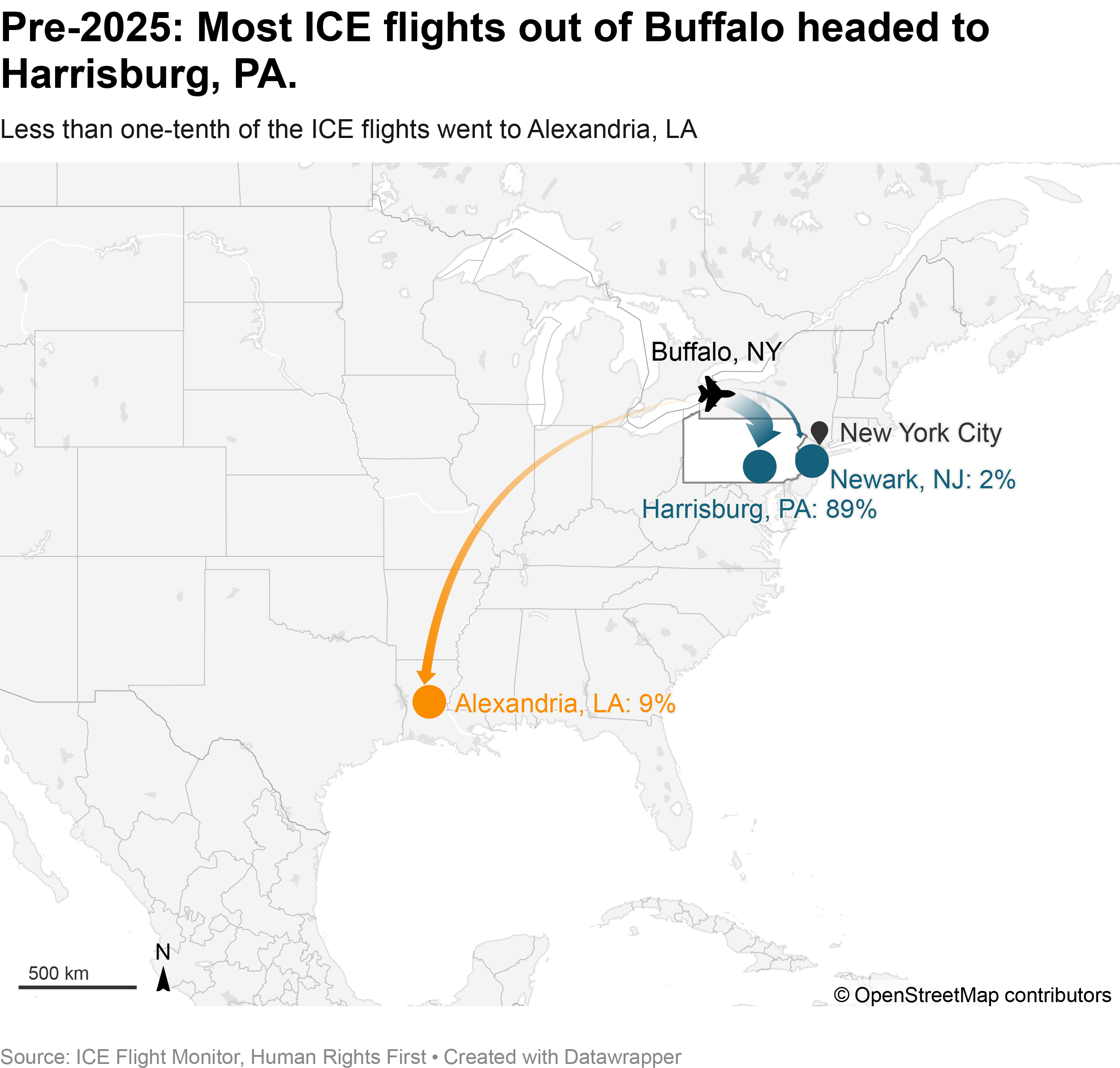
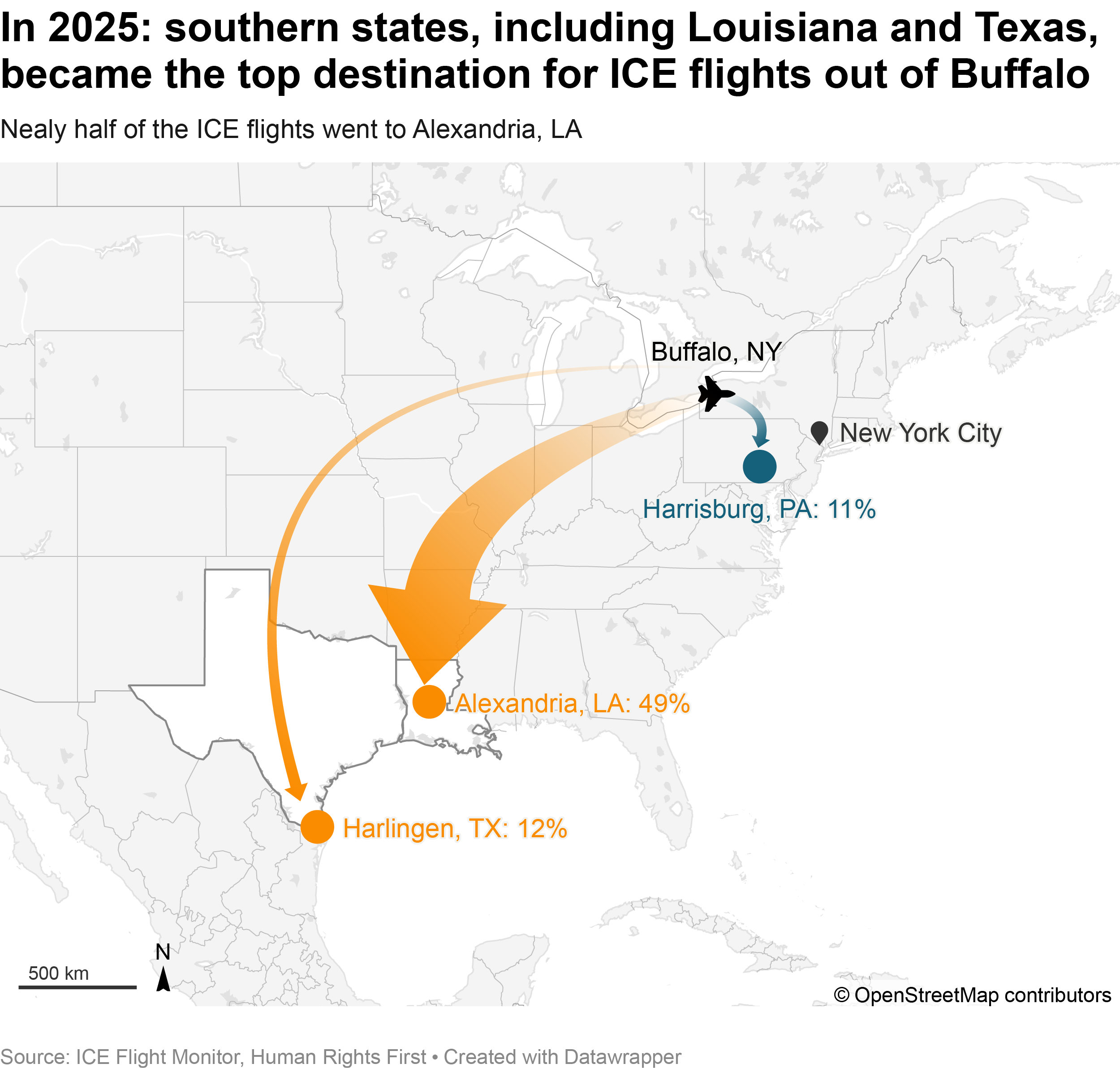
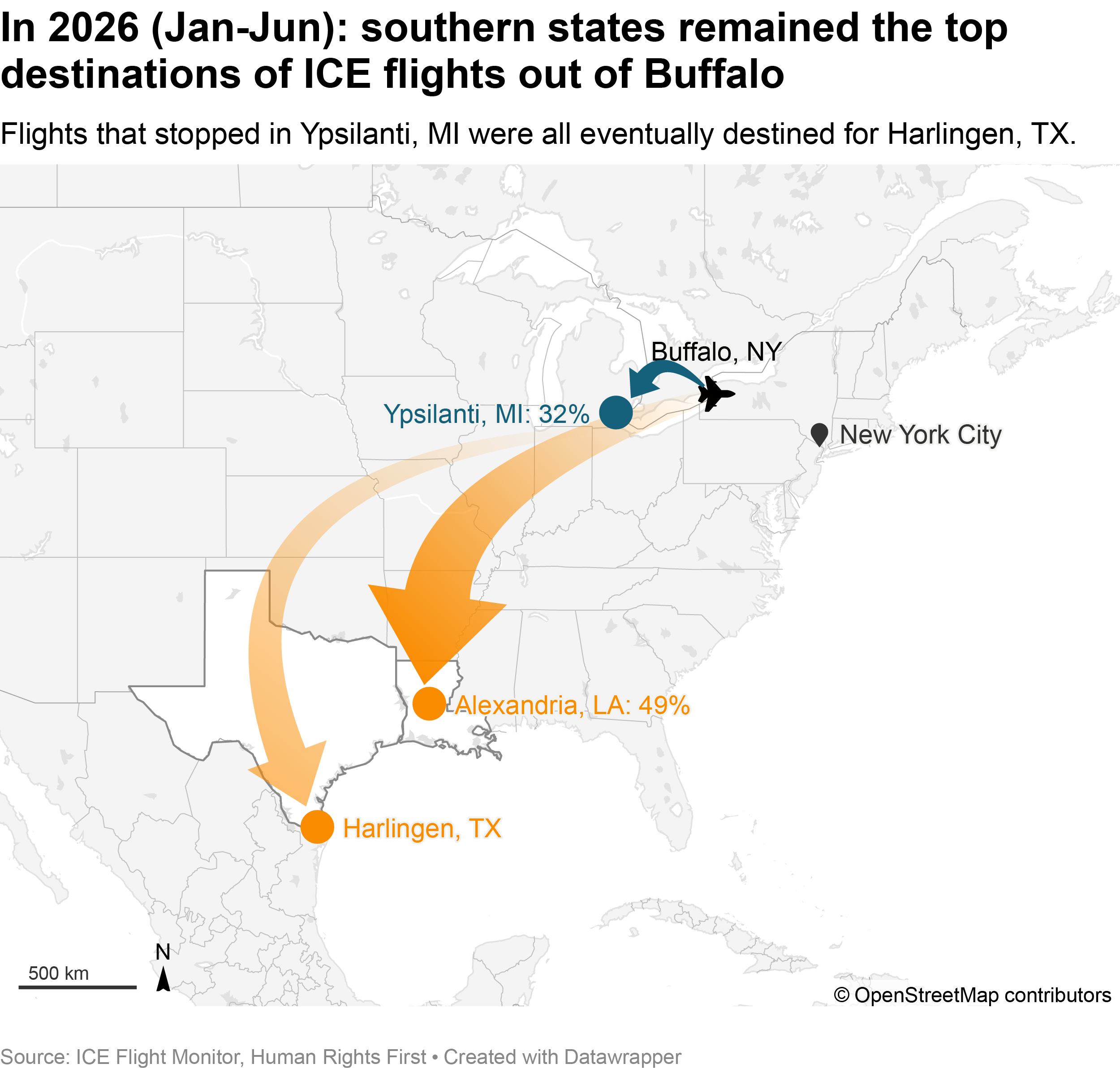
The Buffalo Federal Detention Facility, located in the town of Batavia outside Buffalo, has held more detainees than any other facility in New York state, making it the state's primary facility for detainees facing removal proceedings.
Between 2020 and 2024, most detainees flown out of Buffalo were sent to neighboring Pennsylvania, according to an analysis of the ICE flight data by Human Rights First, an independent, non-profit organization. But beginning in 2025, flight records show a growing share were routed instead to Louisiana and Texas, more than 1,000 miles from where they were first detained.
The destinations matter because moving a detainee can also change the court that oversees parts of their immigration case. While New York falls under the Second Circuit, Louisiana and Texas are part of the Fifth Circuit, where federal judges have adopted different interpretations of immigration law.
That shift became more significant after a February 2026 Fifth Circuit ruling that limited bond-hearing rights for certain migrants who entered the country without inspection. Immigration attorneys say transfers from Buffalo into Louisiana can move detainees into a more restrictive legal landscape, where they may no longer have access to some of the procedural protections available had their cases remained in New York.
Following the Fifth Circuit ruling, ICE's transfer flights out of upstate New York's Batavia detention center consolidated further onto the Alexandria route. That's consistent with a broader pattern: Alexandria emerged as an axis of the Trump administration's deportation campaign.
As transfers out of New York's largest immigration detention center increased, the destination pattern shifted sharply, away from facilities in nearby states and toward the southern border.
The legal stakes of that rerouting are reflected in bond grant rates, the share of bond requests decided by immigration judges that resulted in a grant. Immigration judges in the Fifth Circuit, which covers Texas, Louisiana, and Mississippi, only granted about a quarter of the bond requests in the first half of 2026, its lowest level in years. By comparison, immigration judges at the Second Circuit, which covers New York, granted over 43% in the first half of 2026.
That means detainees transferred out of Buffalo and into the Fifth Circuit are far less likely to be released on bond while their cases proceed than they would have been had they remained in New York, advocates say. They may spend months or longer in detention rather than at home with family, if they're released at all.
Methodology:
This project draws on three primary datasets.
Flight data comes from the ICE Flight Monitor, run by Human Rights First, an independent nonprofit organization that tracks ICE deportation and transfer flights using publicly available aviation data cross-referenced with public records and interviews. The data used for this analysis were requested from the Human Rights First research team via email; the three maps in this piece were built in Datawrapper based on that data. Their dashboard is accessible here.
Detention facility data were drawn from the Vera Institute of Justice's ICE detention trends dataset, accessible here on GitHub; this project used the New York state-level data from that dataset.
Bond grant rate data comparing the Fifth and Second Circuits come from Department of Justice immigration court records analyzed by Joseph Gunther, an independent mathematician, and Brandon Marrow, a civic technologist. Some of their findings are published on their blog, accessible here; the full dataset used for this project was requested from Gunther and Marrow directly via email.